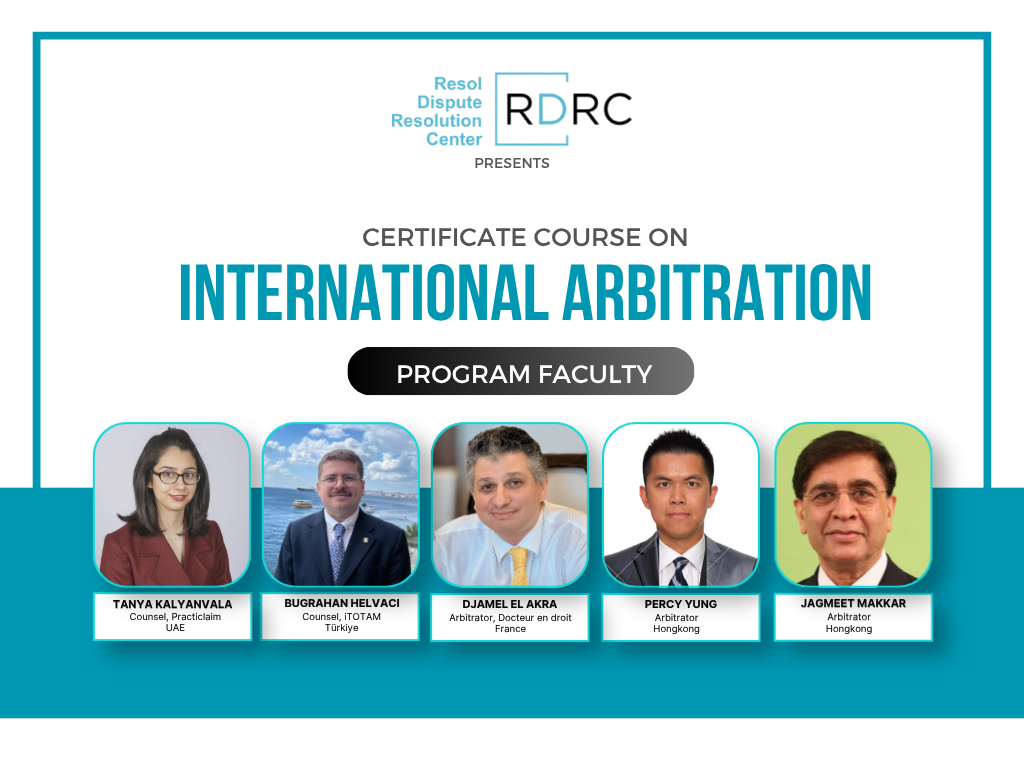
Certificate Course on International Arbitration

Categories: Arbitration
Wishlist Share

About Course

The Global Certificate Program in International Arbitration is designed to provide
participants with a structured and practical understanding of international
arbitration. The course has been delivered by globally recognized practitioners and
academics, ensuring exposure to cross-jurisdictional perspectives.
The program is structured to cover foundational principles, procedural
mechanics, drafting skills, enforcement frameworks, and emerging trends in
arbitration. It is intended for law students, young practitioners, in-house
counsel, and professionals seeking clarity and competence in international
arbitration practice.

The course is delivered in a recorded format, supplemented by an interactive Q&A section where participants can post queries and engage with responses from the community.

The pricing has been thoughtfully structured to remain accessible, while still upholding strong academic and professional standards.

Show More

What Will You Learn?

  • Fundamentals of arbitration and global legal frameworks
  • Drafting strong arbitration clauses and agreements
  • Strategic choices of seat, jurisdiction, and governing law
  • End-to-end arbitration process (initiation to award)
  • Interim reliefs, enforcement, and cost management
  • Role of courts and arbitral institutions
  • Multi-tier dispute resolution (mediation, Med-Arb)
  • Investor-state arbitration and ethical standards
  • Emerging trends like AI and tech in arbitration
  • Basics of maritime arbitration and industry practices

Course Content

Part 1: Foundation & structural framework of Arbitration

  • Lecture 1 by Djamel El Akara
    01:35:48

Part 2: Conduct of Proceedings & Adjudicatory Process

Part 3: Court Interface & Institutional Framework

Part 4: Advanced, Specialized & Contemporary Dimensions

Part 5: Law at Sea – Arbitration in the Global Shipping Economy
This part focuses on maritime arbitration, a specialized and globally significant field. It introduces the structure of the maritime industry and explains why arbitration is the preferred dispute resolution mechanism in this sector. The regulatory framework, including international conventions and roles of key stakeholders, is examined. It also addresses procedural challenges such as evidence handling. The part concludes with practical insights into standard contracts, common disputes like demurrage and bills of lading, and emerging trends in maritime arbitration, providing a comprehensive understanding of dispute resolution in global shipping.

Master Assessment

Student Ratings & Reviews

No Review Yet
No Review Yet
Select your currency
USD United States (US) dollar